The Role of Automation in Industrial Manufacturing
How automated optical sorting, sensor-guided gravimetric feeding, and intelligent extrusion controls are eliminating batch-to-batch variability in recycled polymers.
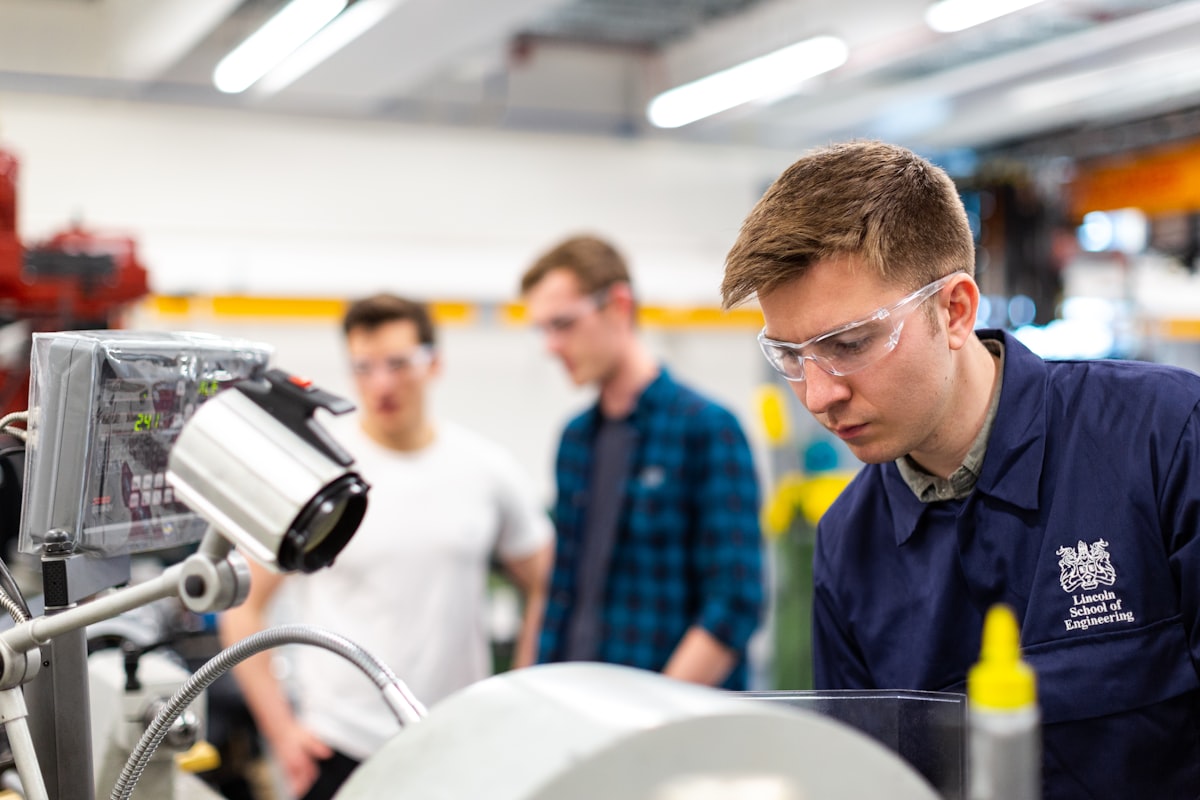
The integration of sensor technologies and closed-loop control systems has transformed industrial polymer processing from an empirical art into an exact science. Automated material handling and real-time quality loops now safeguard product uniformity at every stage.
High-Speed NIR Optical Separation
Before materials enter the extrusion barrel, Near-Infrared (NIR) optical sorting systems scan flaked input streams at thousands of particles per second. By identifying molecular absorption spectra, automated air jets eject cross-contaminating polymers like PET or PVC in milliseconds.
This purity threshold guarantees that subsequent homopolymer and copolymer compounding batches retain intended crystallization rates and mechanical integrity.
"Automating the sorting phase is the single most critical factor in achieving sub-ppm contaminant levels in recycled polypropylene."
Gravimetric Dosing Precision
Modern compounding lines utilize loss-in-weight gravimetric feeders capable of maintaining micro-dosing accuracy within 0.1% of target recipes. Whether adding UV stabilizers, processing aids, or custom color masterbatches, automated dosing eliminates operator inconsistency.
This level of control ensures uniform color dispersion, predictable shrinkage behavior, and consistent surface finish across continuous multi-ton production runs.
- Multi-component loss-in-weight feeders synchronize matrix and additive ratios dynamically.
- In-line viscosity sensors continuously adjust melt temperature to maintain steady head pressure.
- Automated screen changers prevent line stoppages by swapping filtration screens without flow interruption.
Key Technical Takeaways
Conclusion
Investing in advanced automation allows compounding plants to process diverse circular feedstocks while delivering materials that match virgin polymer performance in high-speed converted products.
Need customized polymer compounding?
Our technical engineering team works closely with converters and OEMs to formulate high-performance, sustainable polypropylene compounds tailored to your exact tooling.